

Engaging government
On-demand course
Learn how to engage government
Many organisations believe that engaging with government requires hiring external help. But effective advocacy can come from within an organisation, from the people who know the issue best.
That's why we created In-House, our practical training course for anyone wanting to successfully engage with ministers, MPs and officials on policy and legislation.
This course won't teach you smoke and mirrors, or how to bypass the system. Instead, we walk you through the machinery of government from Cabinet decision-making to select committee submissions, and teach you how to present your position in language that officials, ministers, and MPs will understand.
This isn't a quick skim through. It's 14 hours of structured training, designed to genuinely upskill you or your team, not just give you a surface overview.
In-House helps you build long-term internal capability, allowing you to advocate for yourself without needing to outsource your voice.

In-House: How to engage with government on policy and law
Course available now
14 hours (8 on-demand sessions)
Fits your work schedule
CPD verifiable: 14 hours
$750 + gst pp (NGOs, iwi, education, and community groups)
$1,150 + gst pp (business and sector bodies)
“I really enjoyed In-House. It gave me a huge appreciation for how things work and a great insight into approaching decision-makers. It must have worked. I've had meetings with MPs and ministers, and follow-up emails since. I've already recommended it to friends from other sectors.”
- New Zealand Dental Association

Who is the course for?
NGOs and social service providers: Understand when and how decisions affecting your mission actually get made, so your input lands while it can still make a difference.
Sector groups and associations: Learn how to represent your members in a way officials and ministers can act on, not just hear.
Iwi and Māori organisations: Get a clear, practical understanding of the policy process, so you can engage with confidence on issues that matter to your communities.
Professional services: For lawyers, planners, and consultants who want advice grounded in how government actually works. Includes 14 hours of verifiable CPD.
Businesses: Many companies rely entirely on external advisors to engage with government on their behalf. This course is for the ones who'd rather build that capability internally.
Researchers and think tanks: Learn how to present your evidence so it lands directly in the hands of officials and decision-makers shaping policy.

As a Minister, I believed those seeking to influence policy should front up with their arguments, put their evidence on the table, and let there be a contest of ideas. In-House is grounded in that very principle. It encourages organisations to engage with government on substance, not just connections. I commend it to anyone seeking to do so on that basis.
— Hon Christopher Finlayson KC


Course content
-
We break down the New Zealand system of government, including the separation of powers and the public sector's role in serving the government of the day. You'll come away understanding why successful engagement starts early.
-
A minister's time and attention are limited. This session looks at how political advisors shape what reaches a minister's desk, how coalition agreements set the work programme, and how officials and outside events can shift an issue up the agenda. You'll come away knowing there's more than one way to get your issue in front of a minister.
-
Understanding how officials build advice for ministers changes how useful your input can be. This session covers how officials define a problem, weigh up options, and use the Regulatory Impact Statement. It shows you how to present evidence that slots directly into their analysis.
-
Cabinet operates under conventions like collective responsibility that shape how decisions are made. Here you'll understand what's really happening behind a minister's "it's with Cabinet" response, and what that means for your timing.
-
There's a critical window before a paper reaches Cabinet where a well-timed approach can make all the difference. In this pre-Cabinet phase, a lead minister consults colleagues, including portfolio ministers and coalition partners, to build support. This session looks at that process, including the different roles played by the Prime Minister's Office and the Policy Advisory Group.
-
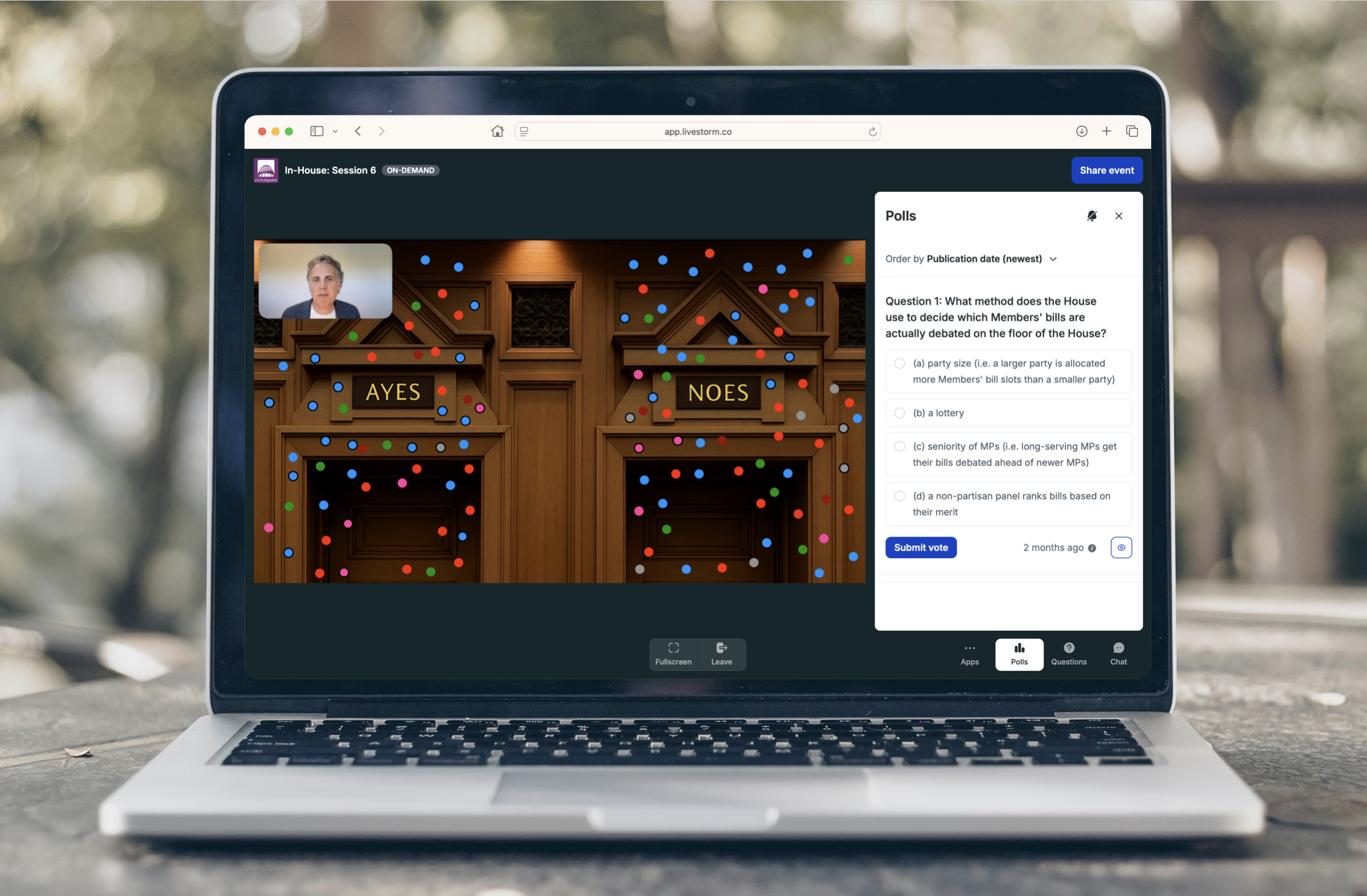
After Cabinet comes Parliament. This session covers how government bills progress, how members' bills move through the ballot, and how conscience votes work, when party discipline lifts. You'll know which stage of a bill's life is worth your attention, and which ones are largely settled already.
-
Select committees are often pictured as MPs setting politics aside to improve the bill together. In practice, party numbers usually decide the outcome. This session covers what makes a submission genuinely effective, and the role of the Departmental Report, one of the most important documents in the process. You'll leave knowing how to put together a submission, written and oral, that MPs and officials will engage with, not just acknowledge.
-
The course closes by bringing it all together into a clear, end-to-end view of how government works, and underlining the importance of developing a flexible engagement plan.
It pleases me that Ryan Malone, whose work I have known for years and encouraged, has pioneered In-House: How to engage with government on policy and law. Such knowledge and guidance are essential for anyone who wishes to deal with the complicated and intricate machine, the New Zealand government.
— Rt Hon Sir Geoffrey Palmer KC

FAQs
-
It covers the same ground as government relations and lobbying, understanding the system well enough to engage effectively. The difference is in the method. Our course shows you how to engage through evidence, process knowledge, and substance, not access or backroom influence. If that's what you mean by lobbying, then yes. If you mean shortcuts or connections, no.
-
NGOs, iwi, education, and community groups: $750 + gst per person
Corporate and sector bodies: $1,150 + gst per person
When you register, you can choose to pay by credit card or have an invoice sent to you.
-
Yes, you can purchase a team pack of 5 licences. Please email hello@civicsquare.co.nz and we will take care of the registrations and provide a single invoice for you.
You have 18 months to activate the licences from the date of purchase. This allows you to activate some licences instantly for your current team and bank the remainder for future onboarding.
Corporate and sector bodies: $4,250 + gst (equates to $850 per person, normally $1,150)
NGOs, iwi, education, and community groups: $3,000 + gst (equates to $600 per person, normally $750)
-
Yes. Even though the sessions are on-demand, you can submit private questions to the facilitator using the ‘Submit Question’ function. Ryan reviews these queries regularly and will respond to you directly via email.
-
You will receive a welcome email giving you immediate access to Session 1. Please save this email, as it allows you to unlock Sessions 2–8 as you progress. If it doesn’t arrive, check your spam folder or contact us directly for assistance.
-
You can choose to pay immediately via credit card or request an invoice for your organisation. Simply select your preferred option during the registration process and we will handle the rest.
-
You have 12 months from registration to complete the course. You will also receive downloadable slides for each session to retain as a permanent reference.
-
Yes. To help maintain momentum, you can opt in to receive automated reminders if 7 days pass between sessions. Simply select this preference when you register.
-
Yes. In-House qualifies as 14 hours of verifiable CPD for New Zealand professionals. It provides structured, interactive learning with verified participation records and facilitator Q&A support.
For example, it meets the continuing education requirements for lawyers (NZLS), accountants (CA ANZ), directors (IoD), engineers (EngNZ), and planners (NZPI).
Note: Please retain your Certificate of Course Completion as evidence for your annual declaration.
-
Once you have completed the 8 sessions, please email hello@civicsquare.co.nz.
We will send you a brief Completion Declaration where you confirm you have completed all the sessions. On receipt, we will issue your formal Certificate verifying your 14 CPD hours.